
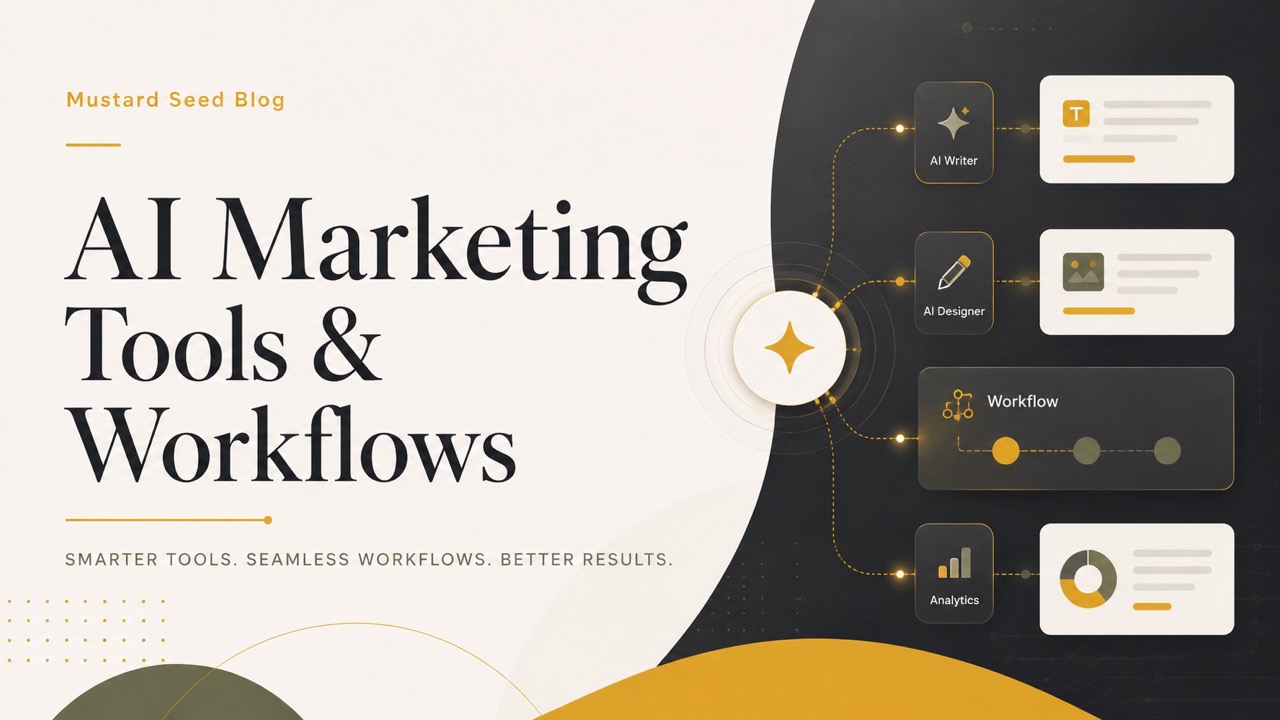
Everyone Has a Stack Now, But Not Everyone Has a Workflow
The original list was simple: Claude, HeyGen, ElevenLabs, Freepik, and Windsor. That says a lot about where marketing work is heading. It’s not just one chatbot doing everything. It’s a stack split across thinking, video, voice, visuals, and personalization. The comments followed the same pattern. Claude kept showing up as the anchor, while Perplexity, ChatGPT, Gemini, Canva, Gamma, Midjourney, HeyGen, ElevenLabs, ActiveCampaign, OpusClip, Topaz, and a dozen niche tools circled around it. The interesting part isn’t that marketers use AI now. It’s that everyone is quietly building their own mini production studio.
But there’s a warning hiding inside all those tool names. A long stack can look impressive and still be chaos. One person said tools change fast, but workflow matters more than tools. That’s the whole thing. A smart five-tool setup beats a bloated fifteen-tool setup if each tool has a clear job. Claude for strategy. Perplexity for research. HeyGen for video. ElevenLabs for voice. Canva or Freepik for visuals. The danger is mistaking the stack for the strategy. Buying another AI tool won’t fix a messy process. It just gives the mess a nicer login screen.
Claude Has Become the Default Marketing Brain
Claude was the strongest recurring answer, sometimes with almost no qualification. “Claude stays at the top.” “Strictly for marketing, Claude.” “Only AI I need is Claude.” That kind of repetition says something. Marketers seem to trust it for the work that requires judgment: copy, analysis, strategy, nuanced conversation, coding, and turning messy inputs into something usable. It’s less of a shiny content toy and more of a thinking partner for people who need to ship without sounding like a template.
There were also mentions of Claude Skills, which points to a bigger shift. Marketers aren’t just prompting anymore. They’re trying to build repeatable systems around their best workflows. That matters because good marketing work has patterns: research, synthesis, messaging, audience analysis, content briefs, campaign angles, reporting, and revision. If a tool can remember or package those workflows, it becomes more than a chat window. It starts feeling like infrastructure. That’s why Claude keeps rising to the top of these conversations. It’s not only about better prose. It’s about helping marketers think through the work before they make the asset.
Research Tools Are Becoming the New Sanity Check
Perplexity came up a lot, usually as the research or quick validation tool. That makes sense. Marketers don’t just need ideas. They need confidence that the idea isn’t floating in midair. Perplexity fills that gap by helping people check claims, scan sources, and get a fast read on a topic before building a campaign around it. Some people also mentioned Grok for research, Gemini for visuals and ads, and combinations like Perplexity for prompting, Grok for research, and Claude for final ideation.
That layered workflow feels more realistic than expecting one model to do everything. Research is different from writing. Writing is different from analysis. Analysis is different from production. The better stacks split the work. One tool gathers context. Another turns it into strategy. Another turns it into a visual, video, or report. That’s why the “top five” question is trickier than it looks. The best tool depends on the task. A marketer who knows when to switch tools has an edge over someone trying to force every job through the same prompt box.
The Creative Tool Wars Are Getting Messy
For visuals and video, the answers scattered fast. HeyGen, ElevenLabs, Freepik, Midjourney, Higgsfield, Nano Banana Pro, Veo 3.1, Topaz, Canva, OpusClip, and even tools for reverse-engineering competitor ad aesthetics all showed up. That tells us the creative side of AI marketing is no longer just “make me an image.” It’s avatars, voiceovers, ad creatives, clipping long-form video, product visuals, infographics, upscaling, and turning one idea into a dozen formats.
HeyGen and ElevenLabs fit neatly into the video-and-voice layer. They help marketers make content that would once require talent, recording time, and editing cycles. Midjourney, Freepik, Higgsfield, Gemini, and Nano Banana Pro sit closer to the visual generation layer. Canva and Gamma are more about packaging: making something presentable quickly. OpusClip handles repurposing. Topaz improves final quality. The stack is starting to resemble an assembly line, and that’s both exciting and exhausting. The teams that win won’t be the ones trying every tool. They’ll be the ones building a repeatable creative pipeline.
The Quiet Winners Are Boring Workflow Tools
One of the more interesting mentions was ActiveCampaign, not as a flashy AI tool, but as something useful for automation ideas, segment suggestions, and faster reporting insights. That’s the kind of AI use that doesn’t get viral demos but actually helps a marketing team move. The same goes for Notion AI for planning and workflows, MailerLite for emails, Runable for structured market research, and even tools tied to website, growth, and campaign operations. These aren’t always glamorous, but they live closer to the daily grind.
That’s where a lot of real value is hiding. AI-generated videos and images are fun to show off, but marketing teams also drown in planning, segmentation, reporting, analysis, resizing, clipping, briefing, and organizing information. A tool that removes one recurring headache can be more valuable than a tool that produces a ja