
Marketers Are Done Being Impressed by Demos
The question wasn’t asking for another list of AI toys. It asked for tools that actually moved the needle, not tools that saved someone ten minutes of typing. That distinction changes everything. The comments had a pretty strong anti-hype current running through them. Some people said Claude was the only thing that had been genuinely useful after trying a bunch of heavily funded products. Others kept coming back to simple stacks: ChatGPT for ideas and ad copy, Claude for long-form thinking and analysis, Perplexity for research, Canva or Gamma for client-ready execution. The mood was clear: stop worshipping tools that look good in launch videos and start measuring what ships.
Claude Became the Grown-Up in the Room
Claude got some of the strongest love, especially for long-form strategy, analysis, research work, and messaging refinement. One person said they had tried plenty of products, including ones with huge funding, and most were “mostly useless” compared with Claude. That’s a sharp little knife. It says a lot about where marketing teams are landing after the novelty wears off. They don’t just need caption generators. They need something that can hold context, reason through messy briefs, compare options, and help turn scattered inputs into usable strategy.
The more interesting praise was for Claude Skills. Someone described moving away from individual agents and becoming fully invested in Claude Skills because they could build repeatable workflows for research and analysis in a more collaborative way. That’s where the real shift is happening. The tool isn’t just answering prompts anymore. It’s becoming part of the operating system. A team can build a skill around its own process, refine it, reuse it, and give feedback. That’s much more valuable than asking a chatbot to “write five hooks” for the hundredth time.
The Winning Stack Is Boring, Which Is Why It Works
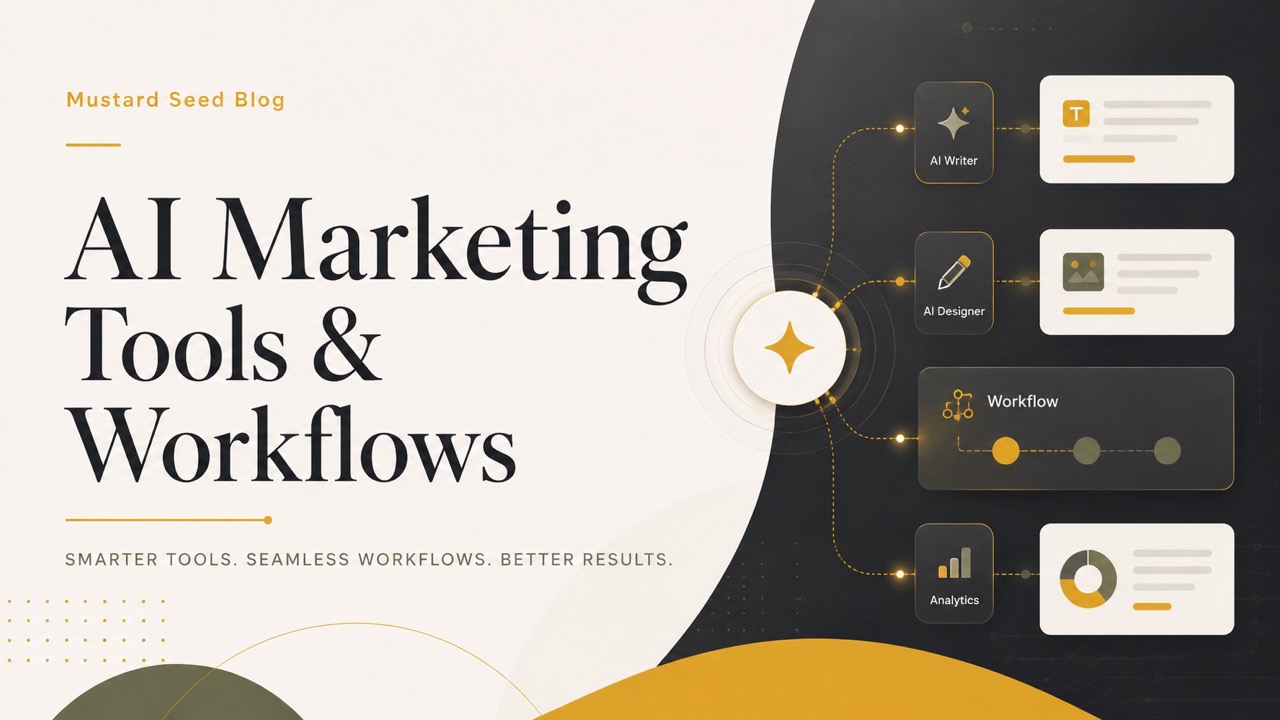
A lot of people didn’t crown one magic winner. They described a stack. ChatGPT for ideation, ad copy, campaign angles, and fast structure. Claude for long content, deeper strategy, and better analysis. Perplexity for sourced research when decisions need support. Canva for design. Gamma for presentations. ElevenLabs for voice. Semrush for SEO. Wix AI for moving promo pages from idea to live page faster. None of that sounds like a dramatic revolution. It sounds like a toolbox that actually gets work out the door.
That’s the point. The real winners are not “one tool to rule them all.” They’re tools that fit into a process and make shipping faster without wrecking quality. One commenter said the tools that matter affect speed, output quality, and decision-making, not just caption volume. That’s the best filter. Does it help the team decide better? Does it help them make something client-ready? Does it reduce the ugly middle work between idea and published asset? If not, it’s probably just another wrapper wearing a nice landing page.
AI Search Tools Are Becoming Their Own Battlefield
Perplexity came up often, but the more specific answer was Perplexity plus Rankprompt for tracking and winning “citation share” in AI Overviews. That’s a very 2026 kind of marketing sentence. It shows how fast the ground is moving. Search isn’t only about ranking anymore. It’s about being cited, summarized, and trusted by answer engines. For teams dealing with AI search visibility, tools that help track where a brand appears inside AI-generated answers may be much more useful than another generic content assistant.
Still, there’s tension here. Some marketers love these tools because they create a new visibility layer. Others are clearly skeptical of endless AI products claiming to solve problems nobody had yesterday. That skepticism is healthy. AI search optimization is real enough to pay attention to, but the market around it is going to be crowded with dashboards that turn uncertainty into colorful charts. The useful tools will be the ones that tie visibility to action: which pages need better structure, which third-party mentions matter, and which citations are actually shaping buyer decisions.
The Anti-Tool Crowd Has a Point
One of the strongest comments was basically: the real winners aren’t tools, they’re people who understand their audience well enough to use a cheap subscription correctly. That may be the most painful truth in the whole thread. A great marketer with ChatGPT and a clear audience insight can outperform a confused team paying for six platforms. AI doesn’t fix bad positioning. It doesn’t invent a compelling offer out of thin air. It doesn’t make a brand interesting if nobody has done the hard work of understanding what customers want.
There’s also a quiet backlash against bloated AI stacks. Some people are tired of wrappers, tired of tools that solve imaginary problems, tired of products that look impressive until they meet real workflow friction. The useful stuff is often less glamorous: email platform AI, segmentation helpers, research assistants, page builders, presentation generators, design tools, and automation layers. Not sexy. Useful. And useful is what matters when a campaign is late, a client needs revisions, or the team has to turn messy research into something someone can actually read.
The Real Needle-Mover Is Workflow, Not Novelty
The emotional thread running through the answers is exhaustion. Marketers have been sold a hundred “game-changing” AI tools, and most of them feel like slightly different doors into the same room. The tools people actually love tend to do one of three things: improve thinking, speed up production, or turn scattered information into decisions. Claude helps with analysis and strategy. ChatGPT helps with angles and drafts. Perplexity helps with research. Canva, Gamma, ElevenLabs, and Wix AI help turn ideas into assets. Rankprompt and similar tools help measure visibility in the new search mess.
That’s why the best answer isn’t a single logo. It’s a standard. A tool has to earn its place. It should make the team sharper, faster, or more consistent. It should reduce busywork without flattening the work into generic mush. It should fit the way people already operate, not force everyone into a fragile new ritual just to justify the subscription.
The winners in AI marketing won’t be the teams with the longest tool list. They’ll be the teams with the clearest workflow. They’ll know when to use Claude, when to use ChatGPT, when to research with Perplexity, when to design in Canva, and when to stop prompting and make a decision. The tool hype is loud. The real advantage is quieter: knowing what matters, then using AI to get there faster.